Winter may look quiet at the farm, but it’s one of our most thoughtful—and surprisingly lively—seasons. While the fields rest and the animals grow their winter coats, the farm hums with planning, preparation, and connection. New family programs, seasonal gatherings, and outdoor adventures remind us that learning and community don’t pause when the temperatures drop.
Winter is also a time to celebrate what we’ve built together. Our upcoming gala brings us indoors to reflect on the year behind us, share stories from the farm, and look ahead to the growth still to come. Every ticket, donation, and show of support during these colder months helps care for our animals, sustain our educational and community programs, and prepare the land for spring.
Thank you for being part of the farm in every season—whether you’re joining us at a winter event, dancing away at the gala, or supporting the work that continues long after the snow falls.
Generally speaking, most animals have wonderful adaptations to survive in the cold. Like wild animals, our domesticated farm animals grow winter coats full of thick hair, wool or feathers that trap warm air close to their bodies. They naturally gain weight which creates insulation and an energy reserve that they can draw from in winter. They will group together and huddle up close in a sheltered area, windbreak or along the tree lines. And they eat A LOT more than they would in warmer months.
Some of the exceptions are our older animals, animals that are dealing with an illness or animals that are not built for the Northeast weather, like our mini-donkey, Bessie. Generally speaking, most animals have wonderful adaptations to survive in the cold. Like wild animals, our domesticated farm animals grow winter coats full of thick hair, wool or feathers that trap warm air close to their bodies. They naturally gain weight which creates insulation and an energy reserve that they can draw from in winter. They will group together and huddle up close in a sheltered area, windbreak or along the tree lines. And they eat A LOT more than they would in warmer months.
Some of the exceptions are our older animals, animals that are dealing with an illness or animals that are not built for the Northeast weather, like our mini-donkey, Bessie. Bessie, our mini-donkey will get a blanket if there is wet weather in the forecast because her hair is not waterproof and she is more prone to getting cold. This is because Donkeys originate from arid climates.
Paisley, Tuff and Suzie have wonderful natural coats that repel the rain and snow, fluff up in the cold to create warm air pockets and they are best to be left un-blanketed. The exception is when we have a very wet forecast with bitter cold temps following. Overall, they know how to keep themselves comfortable and will hang in the shelter away from the wind and precipitation.
Our goats will huddle and snuggle together in their cozy shelter. We fill it with straw which creates air pockets of warmth. The exception is Toga, our Toggenburg goat. She was found shivering one day last winter and since then, we put a coat on her to help her stay warm in winter. We don’t worry too much about our sheep, as they are little furnaces with all that wool they grow, same for our chickens-they are literally covered in down and do pretty well in our Northeast winters.
The most important piece of the puzzle to keep our animals healthy and comfortable in our long winters is HAY. We spend about $8000/year on hay to ensure we don’t run out in the winter and that they have something to munch on throughout the day. Feeding hay keeps animals warm primarily through fermentation, as the microbes in their gut break down the high-fiber material, generating significant internal body heat (metabolic heat), acting like an internal furnace, especially crucial for animals like horses and ruminants (cows, sheep, goats). The digestion of fibrous feeds releases energy as heat, warming the animal from the inside out, which is more effective than just eating calorie-dense grains for warmth.
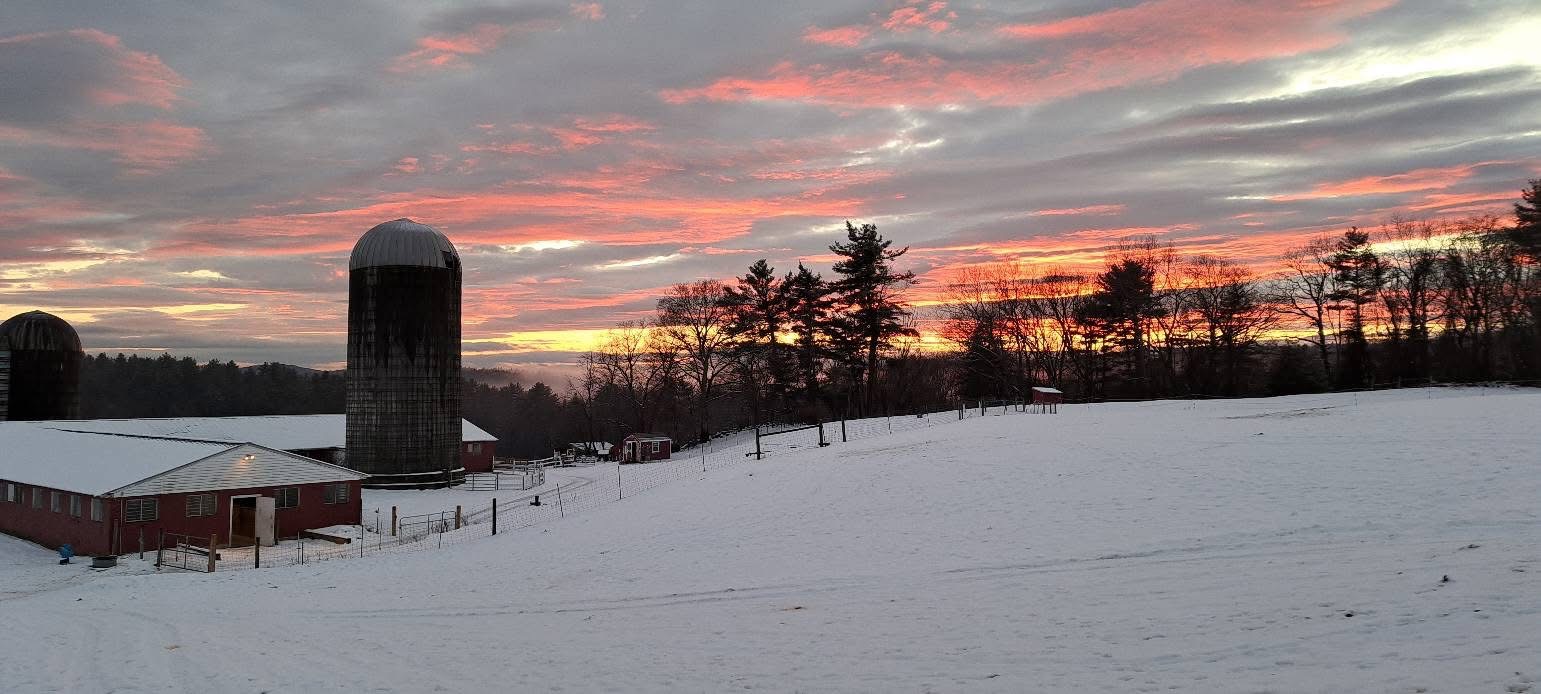
The farm is a wonderful place to visit in the winter. It is quiet and peaceful and absolutely stunning at sunset. You just need to bundle up, pack some traction for your boots and make sure you have a little extra time to observe the amazing adaptions that our farm animals have to stay warm.